
Food Under the Fallout
Voices from ChernobylThis flow traces how contamination entered ordinary food and how economic need, official production targets, and incomplete information shaped what people ate.
increasing Bearing strength in each event
 decreasing
Bearing strength in each eventdecreasingHarvest as Usual
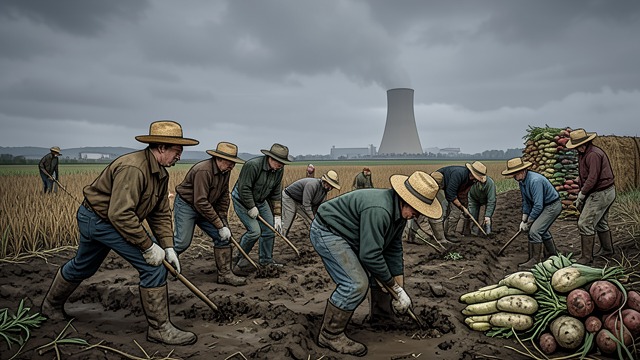
Harvest as Usual
Plans Continue
Agricultural work carried on in contaminated areas, with fields planted and produce collected. Local workers were expected to fulfill existing plans despite changing conditions.
Familiar Labor, New Risk
The routines of sowing and harvesting made danger difficult to perceive. A crop could look and taste normal while carrying a threat that ordinary senses could not detect.
Milk Becomes Evidence
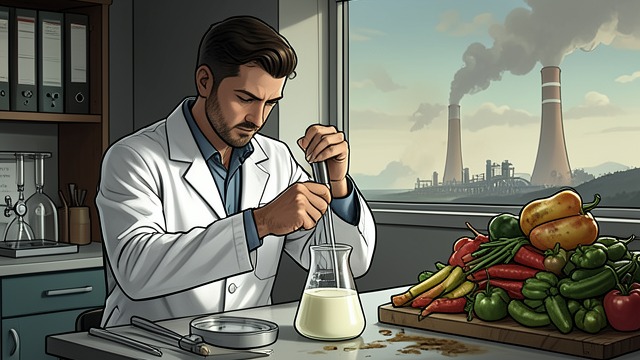
Milk Becomes Evidence
Testing the Supply
Researchers measured milk and animal products from the affected zone and found serious contamination. The language of ordinary food no longer described what laboratory tests detected.
Information Does Not Reach Consumers
Reports and measurements did not guarantee transparent labeling or safe distribution. The distance between scientific results and household decisions left families exposed and uncertain.
Expensive Salami
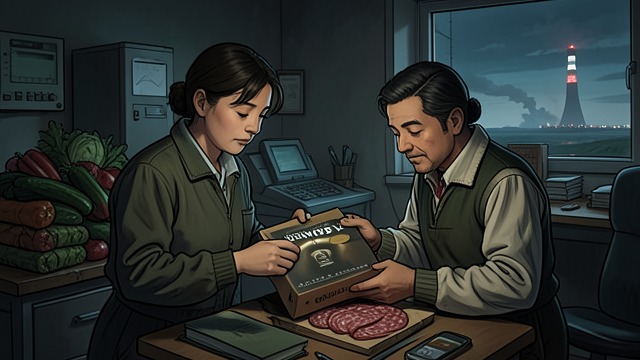
Expensive Salami
A Household Strategy
One family bought costly salami in hopes that price signaled better quality. They later learned that contaminated meat could be mixed into products that were expected to sell readily.
Price Cannot Guarantee Safety
The episode shows how ordinary consumer logic failed under concealed contamination. Money and familiarity offered no dependable protection when food information was managed for political and economic convenience.
Poverty Overrides Advice
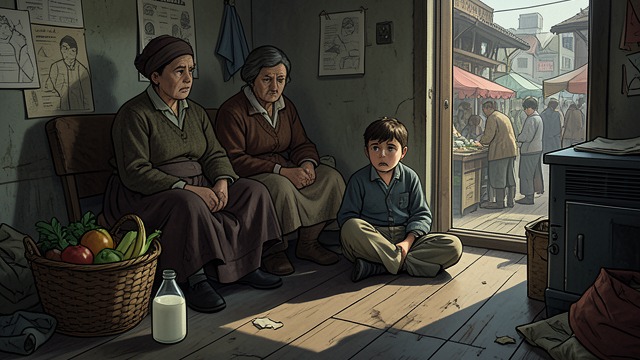
Poverty Overrides Advice
Instructions Meet Scarcity
Residents were told to avoid local milk, vegetables, and other produce, but replacement food could be expensive or unavailable. Many continued using what their land provided.
An Unequal Choice
Advice that ignored household budgets was difficult to follow. The resulting exposure cannot be understood only as ignorance; it also reflects the limited choices created by poverty and policy.
Contamination Travels
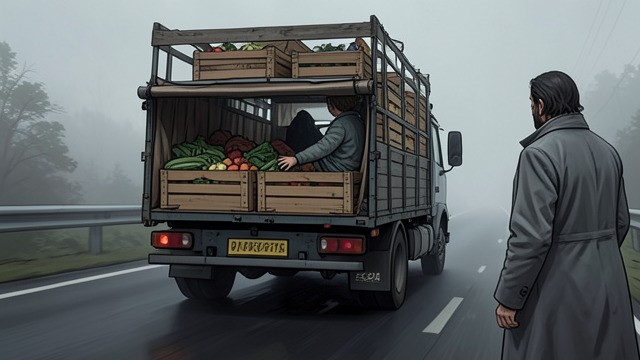
Contamination Travels
Products Leave the Region
Witnesses describe food and materials moving through distribution systems without clear disclosure. Contamination could travel farther than the people who had been warned about its source.
A Public Trust Broken
The food chain became a test of whether authorities would protect consumers or preserve production. The uncertainty reached into meals, family care, and the simplest act of feeding a child.
Spring and summer 1986
By the end of May 1986
The first weeks after the accident
The years after the accident
The decade after 1986
